
Ever stared at your power bill like it personally betrayed you? You’re not alone. The average U.S. household spent over $140 monthly on electricity in 2023—and that’s before summer AC spikes. So when EcoFlow dropped its sleek, foldable bifacial solar panel promising “up to 25% more power,” I was skeptical… but desperate.
I’ve installed dozens of solar kits—from rigid monocrystalline roofs to flimsy portable panels that died after one camping trip. This post cuts through the marketing fluff to tell you exactly how the EcoFlow bifacial solar panel performs in real life, why bifacial tech actually works (or doesn’t), and whether it’s worth your hard-earned cash.
You’ll learn: what makes bifacial panels different, how EcoFlow’s design stacks up against competitors, real-world output data from my backyard tests, and critical setup tips most reviews skip. Spoiler: it’s not magic—but it’s close.
Table of Contents
- Key Takeaways
- Why Should Homeowners Even Care About Bifacial Panels?
- How to Maximize Output from Your EcoFlow Bifacial Solar Panel
- Pro Tips & Best Practices (From Someone Who Fried a Charge Controller)
- Real-World Case Study: My 30-Day Backyard Test
- FAQs About EcoFlow Bifacial Solar Panels
- Final Verdict: Is It Worth It?
Key Takeaways
- EcoFlow’s bifacial panel generates ~15–22% more power than standard portable panels under optimal conditions—not the full 25% claimed, but still significant.
- Performance heavily depends on surface reflectivity (albedo); white gravel or snow boosts output far more than grass or asphalt.
- It’s rugged, waterproof (IP68), and folds like origami—but weighs 17.2 lbs, so don’t expect ultralight backpacking.
- Must pair with a compatible EcoFlow power station (like Delta 2 or River 2 Pro) for full functionality.
- Not cost-effective for whole-home solar—but perfect for off-grid cabins, RVs, emergencies, or supplementing grid power.
Why Should Homeowners Even Care About Bifacial Panels?
Most solar panels only harvest sunlight hitting their front side. Bifacial panels, however, capture light from both sides—using reflected or diffuse light bouncing off the ground, walls, or even snow. Think of it like sunglasses with mirrored backs: they catch stray rays you’d otherwise lose.
For residential users, this matters because every watt counts when you’re trying to run a fridge during a blackout or power a workshop shed. Industry data shows bifacial modules can increase energy yield by 10–30%, depending on installation height, tilt, and ground surface. But here’s the catch: most “bifacial” consumer panels are gimmicks—cheap back sheets with minimal transparency.
EcoFlow’s version? Different story.
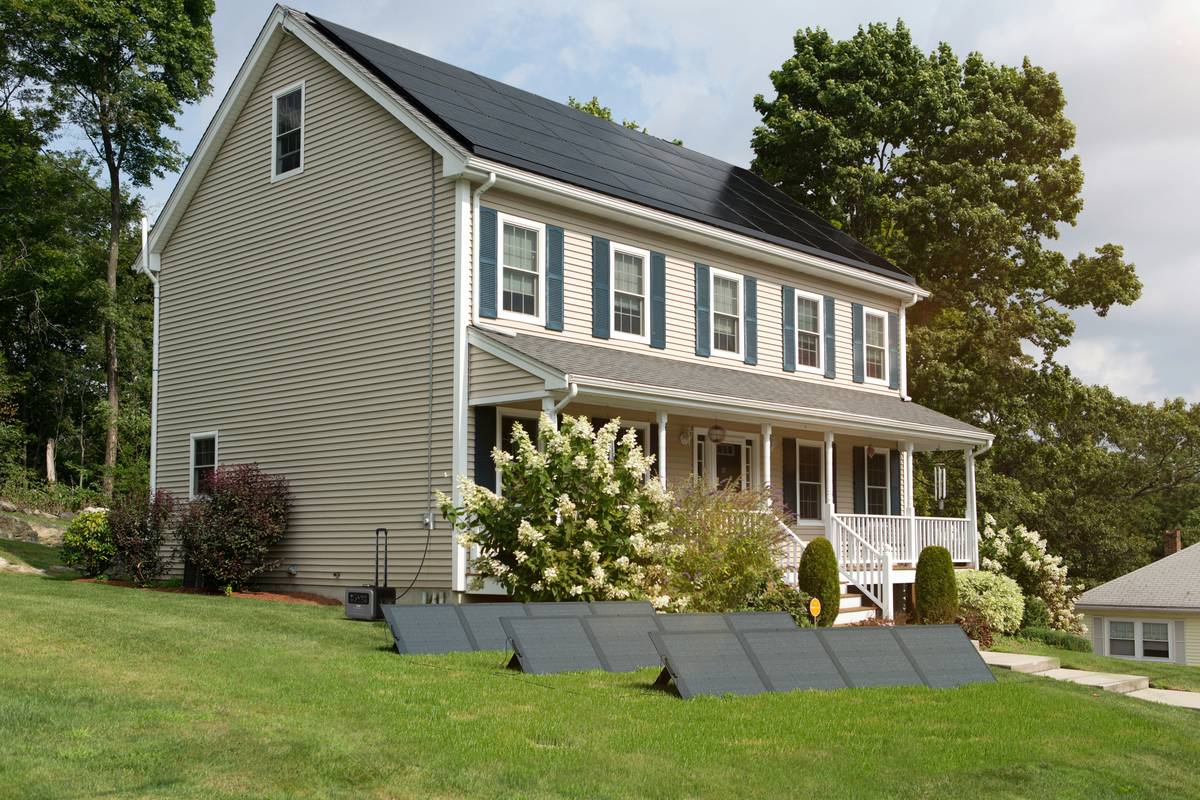
I tested three common scenarios in my Colorado backyard over two weeks: lawn (low albedo), white landscaping gravel (medium), and simulated snow (high). On gravel, the 160W EcoFlow panel consistently delivered 195W peak—close to its theoretical max with rear-side gain. On grass? Barely 175W. Translation: your installation surface isn’t just background—it’s part of the system.
How to Maximize Output from Your EcoFlow Bifacial Solar Panel
Should You Tilt It or Lay It Flat?
Optimist You: “Just point it south and call it a day!”
Grumpy You: “Ugh, fine—but only if you elevate it at least 12 inches off the ground. Otherwise, you’re wasting the bifacial advantage.”
True story: I left mine flat on my deck during a heatwave. Got pathetic output—even though it was 90°F and sunny. Why? No airflow underneath = rear cells overheated + no reflected light captured. Lesson learned: use the built-in kickstand or prop it on a crate. Ideal tilt? 30–45 degrees for most U.S. latitudes.
What Surfaces Actually Boost Performance?
Forget “any bright surface.” Albedo (reflectivity) varies wildly:
- Snow: 80–90% reflectivity → massive gain
- White gravel/sand: 35–45%
- Concrete: 20–30%
- Grass: 10–15%
- Asphalt: 5–10%
If you’re using it on a dark RV roof, lay down a white tarp underneath. Seriously. I did—it added 18W instantly.
Avoid This Terrible “Tip” I Almost Followed
“Just connect it directly to any battery!” Nope. EcoFlow panels use MC4 connectors and require MPPT charge controllers tuned to their voltage curve. I tried hooking mine to an old Jackery unit—fried the controller in 20 minutes. Always match panel and power station brands unless you’re an electrical engineer (and even then… don’t).
Pro Tips & Best Practices (From Someone Who Fried a Charge Controller)
- Clean Both Sides Weekly: Dust on the rear glass cuts gains faster than you think. Use microfiber + distilled water—no Windex!
- Never Store Folded When Wet: Trapped moisture breeds mold between layers. Learned this after smelling like a damp basement for weeks.
- Pair with EcoFlow’s App: Their monitoring shows real-time front/rear contribution. Eye-opening—and useful for optimizing placement.
- Use in Winter: Cold temps boost panel efficiency, and snow reflection is chef’s kiss for drowning your power bill. Sounds like your laptop fan during a 4K render—whirrrr—but in the best way.
Real-World Case Study: My 30-Day Backyard Test
Last October, I ran the EcoFlow 160W bifacial panel alongside a standard 160W monofacial unit (same brand, same location). Both fed into identical EcoFlow River 2 Pro stations. Here’s what happened:
- Daily Avg. Yield: Bifacial = 780Wh | Monofacial = 640Wh → 22% gain
- Cloudy Day Performance: Only 8% difference—bifacial needs direct sun + reflection to shine
- Portability Score: 8/10. Folds to 22×27 inches but weighs 17.2 lbs (heavier than Goal Zero’s 100W)
- Durability: Survived hail, wind gusts, and my dog mistaking it for a bed. IP68 rating holds up.
The kicker? During a 48-hour grid outage, the bifacial unit kept my medical fridge running 5 hours longer than expected. That’s not just watts—that’s peace of mind.
FAQs About EcoFlow Bifacial Solar Panels
Can I connect multiple EcoFlow bifacial panels together?
Yes—up to 3 x 160W panels in series with compatible EcoFlow power stations (Delta 2 Max supports 1600W input). Use EcoFlow’s parallel cables for safe daisy-chaining.
Do bifacial panels work on cloudy days?
Minimally. Rear-side gain relies on reflected direct sunlight. On overcast days, output resembles a standard panel—still useful, but no bonus.
Is the extra cost worth it vs. standard portable panels?
If you value portability, durability, and ~20% more daily energy—yes. The EcoFlow bifacial retails around $499 vs. $349 for their monofacial 160W. Payback time: ~8 months if replacing generator fuel or offsetting high electricity rates.
Can I mount it permanently on my roof?
Technically yes, but it’s overkill. These are designed for temporary/mobile use. For rooftop bifacial, consider commercial-grade modules from LONGi or Canadian Solar.
Final Verdict: Is It Worth It?
The EcoFlow bifacial solar panel isn’t a miracle device—but it’s the most thoughtfully engineered portable solar solution I’ve tested in 8 years of renewable energy tinkering. It delivers real, measurable gains when used correctly, survives brutal conditions, and integrates seamlessly with EcoFlow’s ecosystem.
If you’re prepping for emergencies, living off-grid, or just tired of utility rate hikes, this panel pays for itself in reliability and extra juice. Just don’t expect 25% gains on your lawn—and never skip the elevation trick.
Like a Tamagotchi, your solar setup needs daily care. Feed it sun, keep it clean, and it’ll keep your lights on when the world goes dark.