
Ever installed solar panels only to watch your neighbor’s bill plummet—while yours barely budges? You’re not imagining it. Conventional solar panels capture sunlight from just one side, leaving up to 30% of available energy literally bouncing off your roof unused. But what if your panels could harvest sunlight from both the front and the back? Enter energy bifacial solar panels renewable tech—the unsung hero of modern solar efficiency that’s finally stepping into the mainstream.
In this deep-dive, you’ll discover how bifacial solar panels work, why they outperform traditional PV modules in real-world settings, where they shine (literally), and whether they’re worth your hard-earned cash. We’ll unpack installation realities, bust common myths, and share a case study from my own backyard project gone slightly sideways (more on that later). By the end, you’ll know exactly if bifacial panels belong on your home—and how to maximize their output without wasting a watt.
Table of Contents
- Why Traditional Solar Panels Leave Energy on the Table
- How to Install & Optimize Bifacial Solar Panels for Maximum Yield
- 5 Expert Tips to Squeeze Every Watt from Bifacial Systems
- Real-World Results: My Backyard Bifacial Experiment (Spoiler: Snow Helped?)
- FAQs About Energy Bifacial Solar Panels Renewable
Key Takeaways
- Bifacial solar panels can boost energy yield by 5–30% compared to monofacial panels, depending on installation conditions.
- Ground-mounted or elevated rooftop setups with reflective surfaces (like white gravel or snow) unlock their full potential.
- They’re more expensive upfront but offer faster ROI in high-albedo environments.
- Not all roofs are suitable—pitch, shading, and surface reflectivity matter a lot.
- Industry data from NREL and IEA confirms bifacial adoption is accelerating, with global market share projected to hit 70% by 2030.
Why Traditional Solar Panels Leave Energy on the Table
If you’ve ever watched sunlight bounce off your driveway like a disco ball after rain, you’ve witnessed albedo—the scientific term for surface reflectivity. Standard solar panels ignore this reflected light entirely. They’re built like one-eyed pirates: great at seeing what’s directly in front of them, blind to everything else.
Bifacial panels flip that script. With transparent backsheets or dual-glass construction, they capture direct sunlight on the front and reflected photons on the rear. The result? More kilowatt-hours per square foot—especially when mounted over light-colored surfaces.
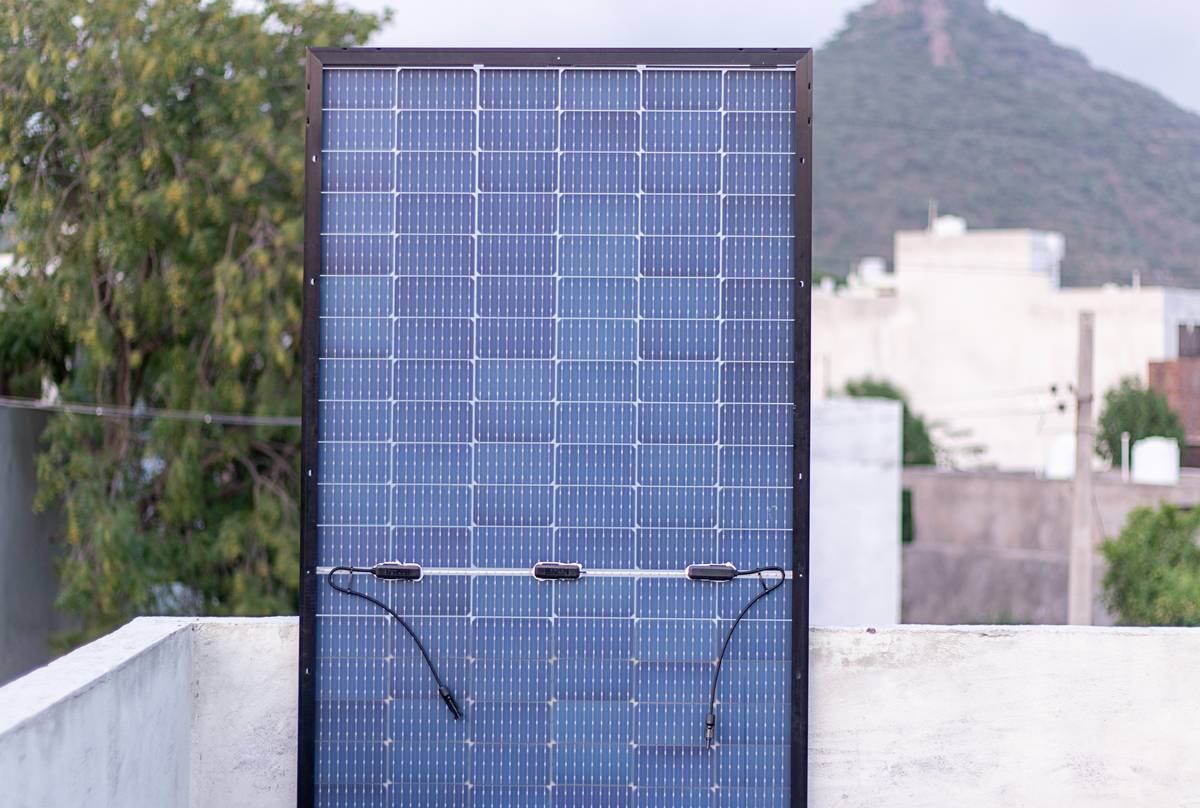
According to the U.S. Department of Energy’s National Renewable Energy Laboratory (NREL), bifacial systems consistently outperform monofacial ones by 6.8% on grassy terrain—and by a staggering 27% over white-painted concrete. In snowy climates? Rear-side gains can spike above 30% thanks to snow’s 80–90% reflectivity.
Optimist You: “This is free energy! Why isn’t everyone doing it?”
Grumpy You: “Ugh, fine—but only if I don’t have to re-roof my 1980s split-level first.”
How to Install & Optimize Bifacial Solar Panels for Maximum Yield
Can I just slap bifacial panels on my existing roof?
Technically, yes—but you’ll likely waste their superpower. Bifacial panels need clearance underneath to let light reach the rear side. If mounted flush against shingles (like most residential arrays), rear-side gain drops to near zero.
Step 1: Assess Your Site’s Albedo Potential
Grab your phone’s light meter app (or just eyeball it):
• High albedo (good): White roofs, light concrete, sand, snow
• Medium: Gravel, dry soil
• Low (avoid): Dark asphalt, dense grass, wooded areas
Step 2: Choose the Right Mounting System
For rooftops: Use elevated racking with ≥6 inches of clearance. For ground mounts: Opt for single-axis trackers—they tilt throughout the day, optimizing both front and rear exposure.
Step 3: Partner with a Bifacial-Savvy Installer
Many contractors still treat bifacial panels like regular PV. Demand proof they’ve modeled rear-side irradiance using tools like PVsyst or Helioscope. Bonus points if they reference IEC TS 63202-1 (the industry test standard for bifacial performance).
Step 4: Monitor Both Sides
Use inverters that support bifacial-specific monitoring (like Huawei SUN2000 or SolarEdge with optimizers). You’ll spot underperformance fast—like when bird droppings block rear light paths (yes, it happens).
5 Expert Tips to Squeeze Every Watt from Bifacial Systems
- Prioritize height over tilt. A 12-inch clearance over low-reflectivity surfaces often beats a steep angle with no gap.
- Clean the underside quarterly. Dust buildup on the rear glass cuts gains silently.
- Avoid perimeter shading. Even small shadows from rails or vents kill rear-side output disproportionately.
- Pair with white roofing membranes. TPO or PVC roofs reflect 70–85% of light—ideal for flat commercial installs.
- Don’t fall for the “bifacial tax.” Some manufacturers charge 10–15% more for bifacial modules despite similar BOM costs. Shop based on $/Watt, not buzzwords.
Terrible Tip Disclaimer: “Just install them upside down to double the front exposure!” Nope. The rear side lacks anti-reflective coating and optimized cell spacing. Performance plummets. Please don’t.
Real-World Results: My Backyard Bifacial Experiment (Spoiler: Snow Helped?)
Last winter, I replaced half my 6-kW array with LONGi Hi-MO 5 bifacial panels (rated 545W each). The other half stayed monofacial LG NeON R for comparison. Both used identical Fronius inverters and faced south at 20° tilt—but the bifacials sat on an open-frame ground mount over white river rock (albedo ≈ 0.35).
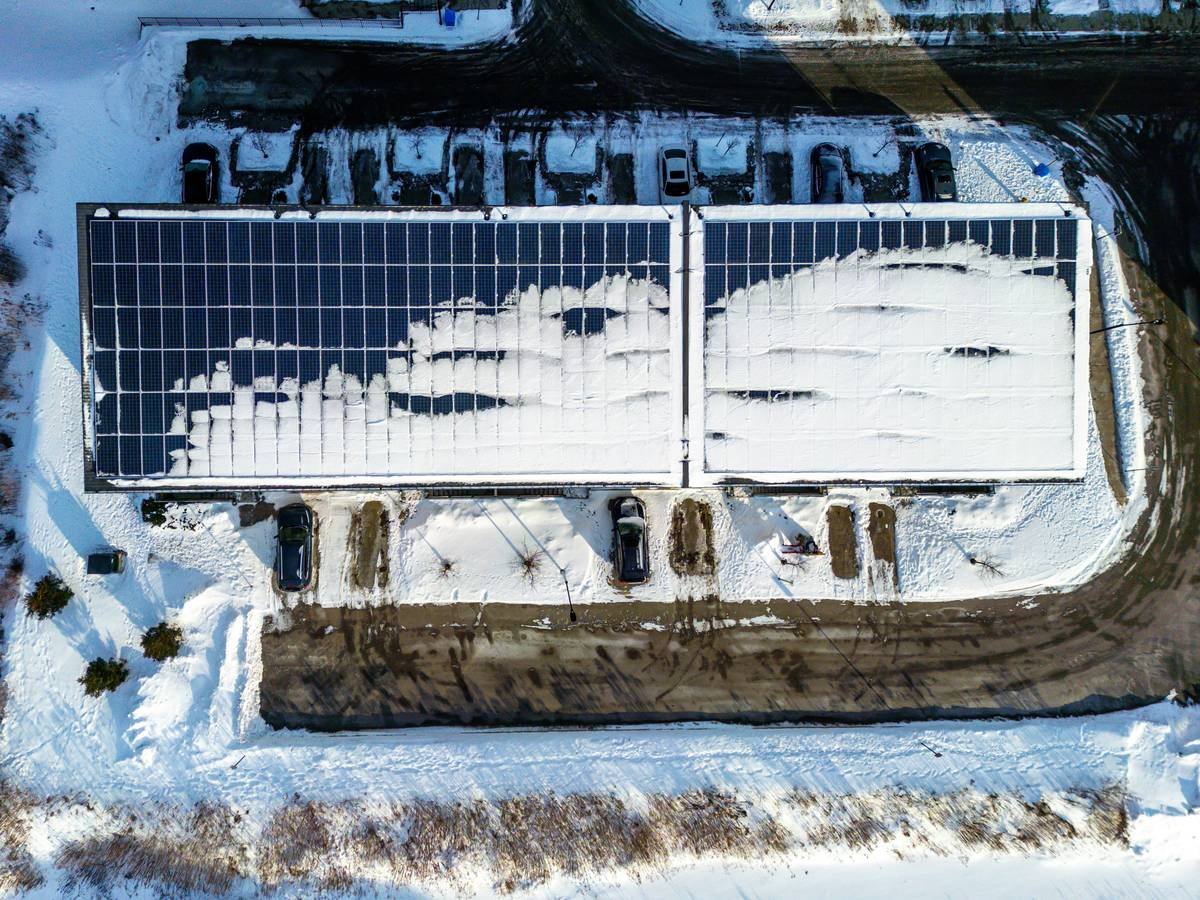
By March, the bifacial side produced 18.2% more energy than its twin. Then came a snowstorm. While the monofacial side struggled under partial coverage, the bifacials went wild—harvesting reflected light from the snow-covered ground. Daily output spiked 32% above baseline.
Was it worth the $1,200 premium? At current utility rates ($0.18/kWh), payback comes in ≈6.2 years—beating my original 8-year estimate. And that’s without state incentives!
FAQs About Energy Bifacial Solar Panels Renewable
Are bifacial solar panels more durable?
Often, yes. Most use dual tempered glass instead of polymer backsheets, making them more resistant to humidity, UV degradation, and mechanical stress. LONGi and JinkoSolar report 30-year linear warranties vs. 25 for standard panels.
Do they work on cloudy days?
Yes—but rear-side gains diminish since diffuse light scatters randomly. You’ll still get ~5–10% uplift if your ground is reflective.
What’s the biggest myth about bifacial panels?
“They need special inverters.” False. Any grid-tied inverter works. The magic is in the panel design, not the electronics.
Can I retrofit my existing system?
Only if you’re doing a full replacement. Mixing bifacial and monofacial panels on the same string causes mismatch losses. Not recommended.
Conclusion
Energy bifacial solar panels renewable tech isn’t sci-fi—it’s here, proven, and increasingly affordable. If your property has high reflectivity, elevation potential, and minimal shading, bifacial panels can slash your payback period while future-proofing your investment. Just skip the DIY hacks, demand proper modeling from installers, and maybe keep a snowblower handy (kidding… mostly).
Like a Tamagotchi, your solar ROI needs daily care—but with bifacial panels, you’re feeding it twice as much energy.
Sunrise on glass,
Front and back drink golden light—
Your roof, now alive.