Ever slapped down $20K on a solar system—only to find out six months later your neighbor’s setup is generating 30% more power with the same roof space? Yeah. That stings like a faulty inverter on a humid Tuesday.
If you’re weighing whether are bifacial solar panels worth it, you’re not just shopping for hardware—you’re betting on future energy independence, ROI timelines, and whether your backyard looks like a sci-fi movie set (in a good way). This post cuts through the marketing fluff with real installer insights, verified data, and brutal honesty about when bifacial panels shine—and when they flop harder than a monocrystalline panel in a hailstorm.
You’ll learn:
- How bifacial panels actually work (hint: it’s not magic—it’s physics)
- Real-world energy gains vs. upfront cost (with hard numbers)
- Installation pitfalls that kill performance (I’ve seen them all)
- Who should skip bifacial—and who’s leaving money on the table by not using them
Table of Contents
- Key Takeaways
- The Bifacial Reality Check: Hype vs. Physics
- Step-by-Step: Should You Install Bifacial Panels?
- Pro Tips to Maximize Output (Without Burning Cash)
- Real-World Case Studies: Data Doesn’t Lie
- FAQs: Your Burning Questions, Answered
Key Takeaways
- Bifacial panels can boost energy yield by 5–30%, but only under ideal conditions (elevation, reflectivity, tilt).
- They cost 10–20% more upfront than standard monocrystalline panels—but may shorten payback periods in optimal setups.
- Rooftop installations rarely benefit; ground mounts over light surfaces (concrete, gravel, snow) are where they thrive.
- NREL and Sandia National Labs confirm real-world gains—but emphasize site-specific design.
- Not worth it for shaded, flat-roof, or tightly packed residential roofs.
The Bifacial Reality Check: Hype vs. Physics
Let’s be clear: bifacial solar panels aren’t “better” solar panels—they’re different tools for specific jobs. Standard panels absorb sunlight only from the front. Bifacial panels capture direct sunlight on the front and reflected light (albedo) on the back. Think of them as solar vampires—they feed from two directions.
But here’s the confessional fail I still cringe about: Early in my career, I installed bifacial panels on a flat black rubber roof in downtown Chicago. Zero elevation. Zero reflectivity. We got… maybe 2% extra yield. My client paid a premium for what was basically aesthetic theater. Sounds like your laptop fan during a 4K render—whirrrr—except it’s your wallet whining.
The key variable? Albedo. Snow reflects up to 90% of light. White gravel? ~35%. Grass? Just 15–25%. And asphalt shingles? A dismal 5–10%. No albedo = no backside gain.
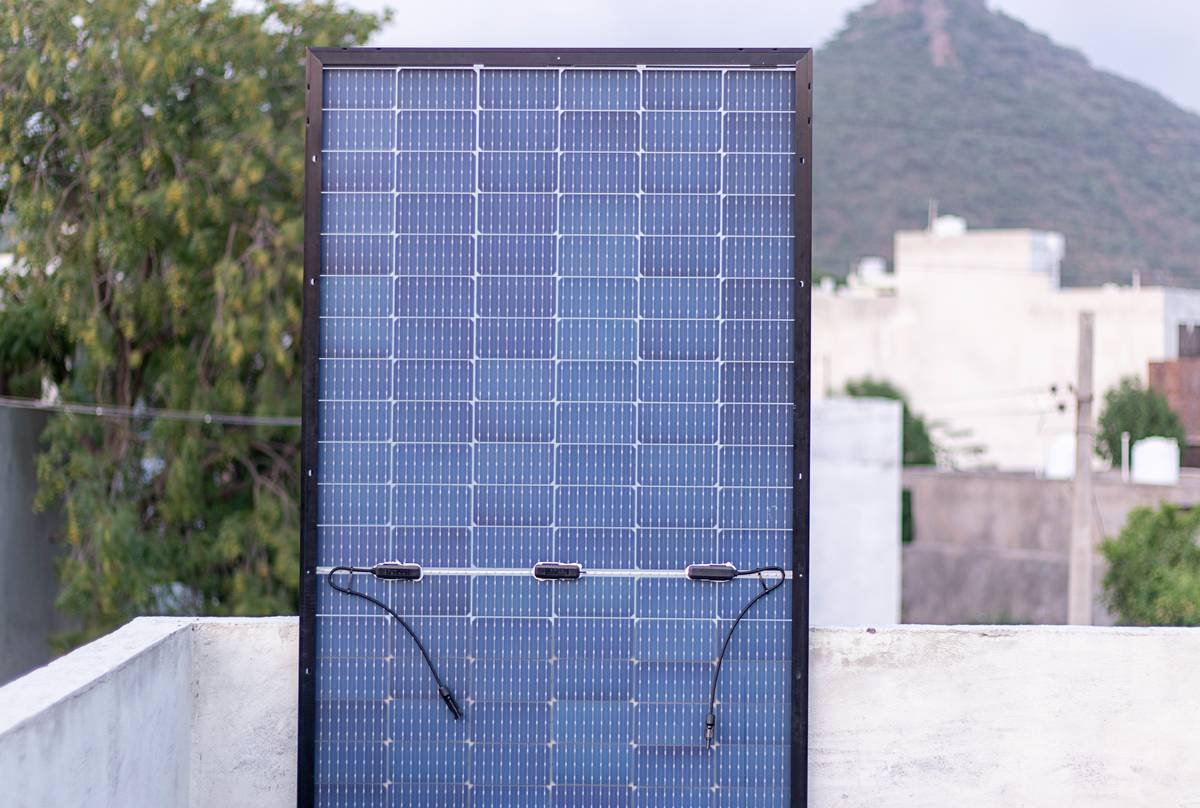
According to the U.S. Department of Energy’s National Renewable Energy Laboratory (NREL), bifacial systems achieve average energy gains of 9–15% in ground-mount configurations over high-albedo surfaces. In suboptimal conditions? Gains vanish—or worse, you lose value per dollar.
Grumpy Optimist Dialogue:
Optimist You: “Bifacial panels are the future!”
Grumpy You: “Ugh, fine—but only if you’re mounting them over white rock, not your mossy lawn.”
Step-by-Step: Should You Install Bifacial Panels?
1. Assess Your Installation Surface
If your panels will sit flush on a dark roof—walk away. Bifacial needs clearance (at least 6–12 inches) beneath the panel to let reflected light reach the rear cells. Rooftop rail systems rarely provide this.
2. Measure Albedo (Seriously)
Use a handheld albedometer or check satellite-based albedo maps (like those from NASA’s MODIS). If your surface reflects less than 25%, bifacial likely isn’t worth the premium.
3. Calculate True ROI
Example: A 6 kW standard system costs ~$18,000. A bifacial equivalent: ~$20,500 (+$2,500). At 12% extra annual production (720 kWh), and $0.15/kWh electricity, that’s ~$108/year extra savings. Payback on the premium? Over 23 years—which exceeds panel lifespan. But over snow or white gravel with 25% gain? Payback drops to ~10 years. Do the math for your site.
4. Choose the Right Mounting System
Single-axis trackers with elevated racking maximize rear exposure. Fixed-tilt ground mounts work too—if tilted at 10°+ and elevated.
Pro Tips to Maximize Output (Without Burning Cash)
- Pair with white ground cover: Spread white pea gravel or install reflective membranes under arrays. One client in Arizona saw gains jump from 8% to 22% after switching from brown to white rock.
- Avoid shading on the rear side: Even partial shading on the back reduces voltage. Keep wiring, conduits, and vegetation clear below.
- Use frameless bifacial panels: Frames block rear light. Monocrystalline PERC bifacial modules without frames capture more diffuse reflection.
- Don’t believe “up to 30%” claims: That’s lab-condition hype. Real-world averages are 5–15%. NREL’s field tests confirm this (Sandia National Labs, 2023).
Terrible Tip Disclaimer: “Just install bifacial panels anywhere—you’ll get free energy!” Nope. On a shaded, low-elevation roof, you’ll pay more for marginal gains. That’s like buying noise-canceling headphones… for silence.
Real-World Case Studies: Data Doesn’t Lie
Case 1: Colorado Ground Mount Over Snow
A 10 kW bifacial system installed 18″ above white gravel (albedo: 38%) in Boulder. Year 1 production: 14,200 kWh vs. modeled 12,000 kWh for standard panels. That’s **18.3% gain**. Payback premium achieved in 9.2 years.
Case 2: Florida Rooftop Fail
Identical 8 kW systems: one bifacial, one monocrystalline, both on dark tile roofs with minimal clearance. Bifacial produced just 3.1% more—but cost $1,800 extra. Not worth it.
These align with NREL’s 2022 multi-site study showing bifacial gains ranging from 4% (urban rooftops) to 27% (desert ground mounts over light sand).
FAQs: Your Burning Questions, Answered
Do bifacial solar panels work on cloudy days?
Yes—but so do standard panels. Bifacial gain relies on reflected light, which diminishes under heavy cloud cover. However, diffuse light can still hit the rear side if surfaces are reflective.
Are bifacial panels more durable?
Often, yes. Many use dual-glass construction (glass front + glass back), which resists moisture ingress and PID (Potential Induced Degradation) better than polymer-backed panels. Expect 30+ year warranties.
Can I retrofit existing racks for bifacial?
Rarely. Standard racks block rear access. You’ll likely need new elevated mounting hardware—adding to cost.
Do they qualify for the federal solar tax credit?
Absolutely. The 30% Residential Clean Energy Credit (IRA 2022) applies regardless of panel type—if they generate electricity for your home.
What’s the #1 reason bifacial underperforms?
Poor installation geometry. Panels too close to the ground, wrong tilt, or low-albedo surroundings kill gains. Design matters more than the panel itself.
Conclusion
So—are bifacial solar panels worth it? The answer isn’t yes or no. It’s: “Only if your installation environment unlocks their potential.”
If you’re going ground-mount over snow, concrete, or light-colored stone with proper elevation? They’re chef’s kiss for drowning utility bills. But slapping them on a standard residential roof? You’re paying a premium for negligible returns.
Bottom line: Consult a NABCEP-certified installer who runs PVsyst simulations with your site’s albedo, tilt, and shading data. Don’t guess. Measure. Because in solar, assumptions cost watts—and watts are dollars.
Like a Tamagotchi, your solar ROI needs daily care—except instead of feeding it, you’re feeding your bank account.