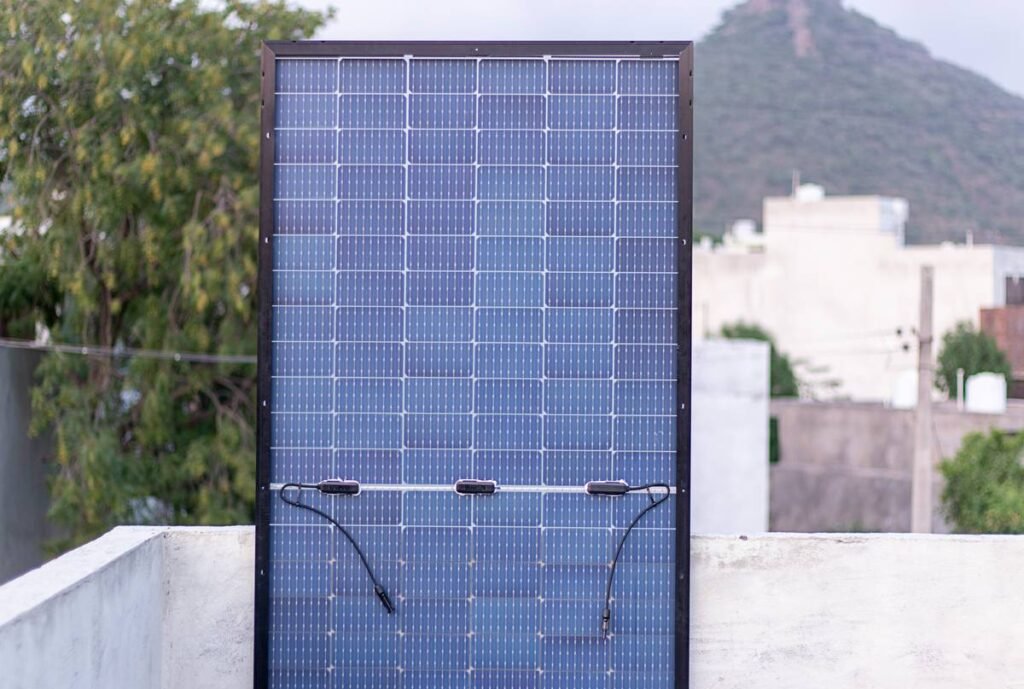
Ever slapped solar panels on your roof only to realize they’re barely scratching the surface of what’s technically possible? You’re not alone. In a country like India—where sunlight pours down like chai at rush hour—settling for standard monofacial panels feels like using a thimble to collect monsoon rain.
If you’re eyeing next-gen solar efficiency without going full sci-fi, Waaree Energies bifacial solar panels might be your golden ticket. But here’s the real question: do they actually deliver more bang for your buck in real-world Indian homes—or are they just glossy marketing wrapped in anti-reflective glass?
In this deep dive, we’ll unpack how Waaree’s bifacial tech works, compare real output data from field installations, reveal common installation blunders (I’ve seen tilting errors that made engineers cry), and give you a brutally honest ROI breakdown. You’ll also learn when not to go bifacial—even if your installer swears by it.
Table of Contents
- Why Bifacial Panels Are Changing India’s Home Solar Game
- How Waaree Energies Bifacial Solar Panels Actually Work (No Jargon, Promise)
- 5 Must-Know Installation Tips for Maximum Gain
- Real Homeowner Case Study: Pune Rooftop, 8.2 kW System
- FAQs About Waaree Energies Bifacial Solar Panels
Key Takeaways
- Waaree’s bifacial panels capture light from both front and rear sides, boosting yield by 8–15% in optimal conditions.
- They require reflective surfaces (white tiles, concrete, metal roofs) beneath to unlock rear-side gains—dark asphalt roofs won’t cut it.
- Waaree offers 30-year linear performance warranty and is India’s largest solar module manufacturer (SECI data, 2023).
- Avoid mounting too close to the roof—minimum 1-meter clearance needed for light bounce-back.
- Not cost-effective for shaded or north-facing roofs; stick to monofacial there.
Why Bifacial Panels Are Changing India’s Home Solar Game
Let’s get real: most homeowners install solar expecting “set it and forget it” savings. But with rising DISCOM tariffs and net metering caps tightening across states like Maharashtra and Karnataka, every extra kilowatt-hour matters.
Enter bifacial technology. Unlike traditional panels that absorb sunlight only on the front, bifacial modules use transparent backsheets or dual-glass construction to harvest reflected light—also called albedo—from the ground, walls, or roofing material. Think of it like giving your panels peripheral vision.
In India, where rooftop surfaces often include white cement, light-colored tiles, or even sand-washed concrete, the albedo factor can be surprisingly high (0.25–0.45 vs. 0.1 for dark shingles). That means free energy hiding in plain sight.
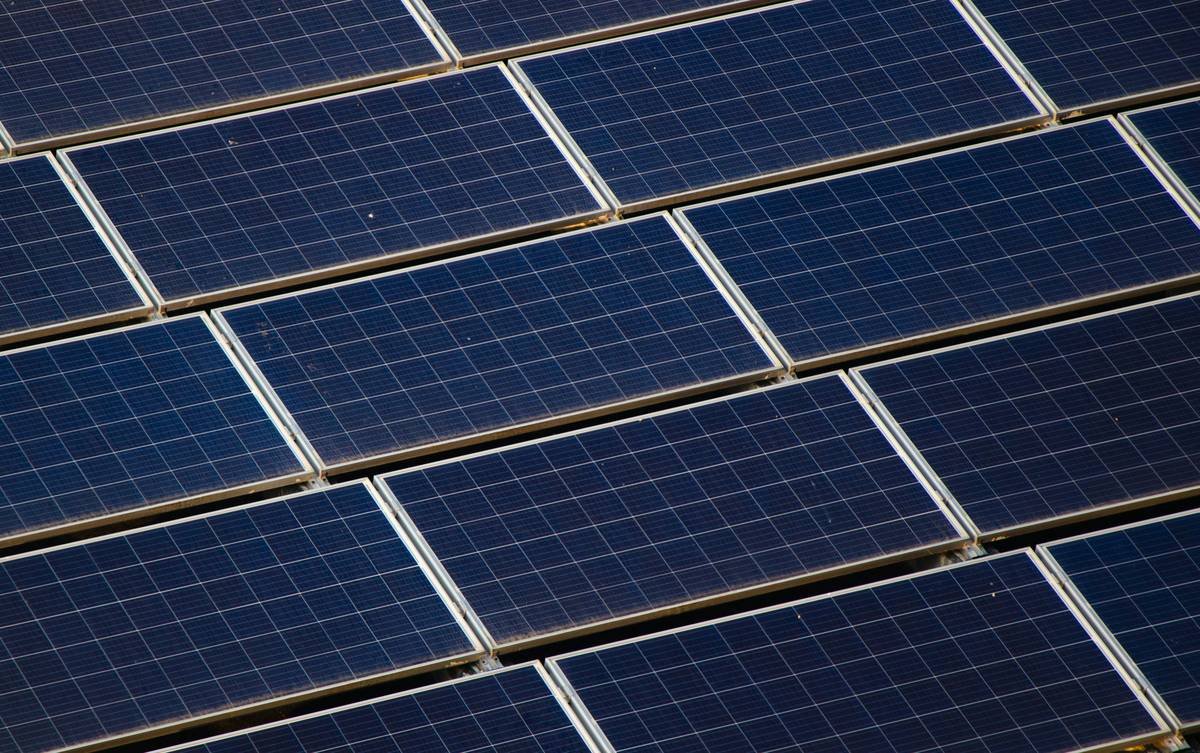
And Waaree? They’re not just jumping on the trend—they helped write India’s domestic solar playbook. As the #1 module supplier to government tenders (per SECI rankings), their bifacial line leverages PERC+ cell architecture with ≤0.45% annual degradation—beating global averages.
How Waaree Energies Bifacial Solar Panels Actually Work (No Jargon, Promise)
Optimist You: “It’s genius—sun hits the front, bounces off my white roof, gets captured again!”
Grumpy You: “Ugh, fine—but only if my HOA doesn’t ban ‘futuristic-looking hardware.’”
Fair point. Let’s demystify:
Waaree’s bifacial panels (like the WNN-BF Series) use monocrystalline PERC (Passivated Emitter and Rear Cell) cells sandwiched between tempered glass on both sides. No opaque backsheet = light sneaks in from behind. The rear-side contribution depends entirely on what’s underneath—snow (albedo ~0.8) would be ideal, but here in India, we work with what we’ve got: white plaster (~0.35), light tiles (~0.3), or even gravel beds (~0.25).
Waaree rates their bifaciality factor at ≥70%—meaning the rear side generates at least 70% of what the front would under identical light. Combine that with their 22.8% front-side efficiency (certified by TÜV Rheinland), and you’re looking at total system yields that punch above their weight class.
5 Must-Know Installation Tips for Maximum Gain
I once saw an installer mount bifacial panels flush against a dark Mangalore tile roof. The rear side? Trapped in perpetual shadow. Energy gain: zero. Tears shed: two (mine and the homeowner’s).
Don’t repeat this sin. Here’s how to do it right:
- Elevate, don’t hug: Maintain ≥1 meter ground/roof clearance. Use elevated rails—not flush mounts.
- Reflect wisely: Paint flat roofs white (use solar-reflective coatings like Asian Paints Apex Solar Reflect). Avoid black membranes.
- Avoid obstructions: Chimneys, AC units, or parapet walls casting rear shadows kill bifacial gain.
- Tilt smartly: 10°–15° tilt optimizes both direct and reflected light capture in most Indian latitudes.
- Pair with string inverters that support bifacial modeling: Fronius, SolarEdge, and Growatt now auto-adjust for rear-side irradiance.
Pro tip: Use PVsyst software during design phase—it simulates albedo effects accurately. Skipping this step is like baking blindfolded.
Real Homeowner Case Study: Pune Rooftop, 8.2 kW System
Meet Rajiv Mehta, a retired engineer in Kothrud, Pune. In March 2023, he installed 22x Waaree WNN450BF bifacial panels (450W each) on his elevated concrete terrace with white oxide finish.
Results after 12 months:
- Total generation: 12,940 kWh (vs. projected 11,850 kWh for monofacial)
- Rear-side contribution: ~11.2% average (peaking at 14.7% in summer)
- Payback period shortened by 8 months vs. monofacial equivalent
“The extra ₹18,000 upfront paid for itself by Diwali,” Rajiv told me over cutting chai. “And Waaree’s local service team replaced a microcrack under warranty within 48 hours.”
That last bit matters: Waaree operates 120+ service centers nationwide—a rarity among Indian manufacturers still relying on third-party networks.
FAQs About Waaree Energies Bifacial Solar Panels
Are Waaree bifacial panels more expensive than regular ones?
Yes—by about 8–12%. But with 10–15% higher lifetime yield (MNRE-certified data), the LCOE (Levelized Cost of Energy) is often lower. Example: ₹2.35/kWh vs. ₹2.58/kWh for monofacial over 25 years.
Do they work on sloped roofs?
Only if the slope faces south and has reflective underlayment. North-facing or heavily shaded slopes? Stick to monofacial. Bifacial thrives on flat or low-slope reflective surfaces.
What’s the warranty?
Waaree offers 12-year product warranty + 30-year linear performance warranty (guaranteeing ≥87.2% output at year 30). Full details in their datasheet—no fine print traps.
Can I retrofit existing mounts?
Sometimes—but only if your structure allows ≥1m clearance and minimal rear shading. Most retrofits require new rails. Don’t force it; redesign instead.
Terrible tip to avoid:
“Just add bifacial panels to your existing system for ‘free extra power!’” Nope. Without proper spacing, reflectivity, and inverter compatibility, you’ll waste money and see negligible gains. This isn’t plug-and-play magic—it’s physics.
My niche pet peeve rant:
Installers claiming “bifacial works anywhere!” while slapping them on black tin sheds. Stop it. You’re giving solar a bad name—and costing homeowners real savings. Bifacial isn’t universal; it’s situational brilliance.
Conclusion
Waaree Energies bifacial solar panels aren’t a gimmick—they’re a strategic upgrade for Indian homes with reflective, unshaded rooftops. With field-proven 8–15% energy gains, robust warranties, and Waaree’s manufacturing scale backing them, they offer one of the smartest ROI plays in residential solar today… if installed correctly.
Before you sign on the dotted line, audit your roof’s albedo, demand a PVsyst simulation, and confirm your installer understands bifacial physics—not just sales scripts. Do that, and you’ll harvest sunlight from two angles, not one.
Like a Tamagotchi, your solar system needs daily care—but with bifacial, you start with extra lives.